



Mega Man 7 vs Mega Man IV
Side-by-side comparison of features, pricing, ratings, and alternatives.
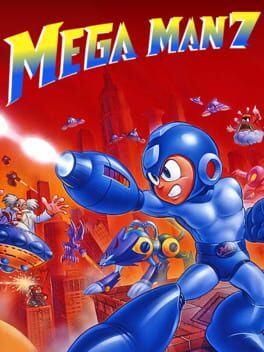
Mega Man 7 is an action-packed platform video game developed and published by Capcom for the Super Nintendo Entertainment System. Following Dr. Wily's imprisonment, four mysterious machines attack the city, prompting the Blue Bomber to team up with Rush, Roll, and Dr. Light to foil the sinister doctor's escape plan. Experience classic side-scrolling gameplay as you battle through challenging robotic stages, acquire new weapons from defeated bosses, and uncover the truth behind Wily's remote-controlled diversion. With vibrant 16-bit graphics and tight platforming mechanics, it is the seventh installment in the beloved original series.
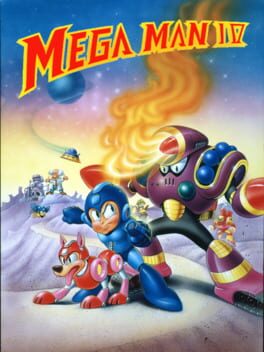
Mega Man IV is a classic action-platformer released for the Game Boy handheld system. Following an attack on the World Robot Expo by Dr. Wily, Mega Man must battle through stages filled with rogue machines, recover lost parts for Beat, and defeat eight powerful robot masters to save the world once again. Equipped with his trusty Buster, Rush, and the assistance of Beat, the Blue Bomber faces off against new technological threats culminating in a showdown against Wily's awesome Wily Tank. Players experience tight platforming challenges, intense boss fights, and quintessential retro shooter gameplay tailored for portable hardware.
- Vibrant and detailed 16-bit pixel art
- Rewarding boss weapon progression system
- Memorable and catchy soundtrack
- Engaging platforming challenge for fans
- Engaging boss fights with unique patterns
- Responsive and precise platforming controls
- Introduction of Beat and his collectible parts
- Faithful expansion of the portable Mega Man formula
- High difficulty can frustrate newcomers
- Short overall length compared to modern titles
- Limited replayability once all secrets are found
- High difficulty can frustrate casual players
- Monochrome graphics lack color variety of NES titles
- Short overall length compared to console counterparts
More alternatives & similar tools
Alternatives to Mega Man 7
View all →
Alternatives to Mega Man IV
View all →
Stop Dr. Wily's newly altered industrial robots in this classic action platformer.
Battle Dr. Wily and the Mega Man Killer Punk in this classic Game Boy platformer.
The Verdict
AI-generated from listing dataBoth games offer classic Mega Man platforming with high difficulty, but Mega Man IV is a portable 8‑bit experience while Mega Man 7 delivers richer 16‑bit graphics and sound on a console.
Key differences
- •Platform: Game Boy (portable) vs. SNES (home console).
- •Graphics: Monochrome 8‑bit vs. colorful 16‑bit pixel art.
- •Audio: Basic handheld tones vs. full 16‑bit chiptune soundtrack.
- •Companion mechanics: Beat’s collectible parts (IV) vs. Rush’s hidden‑area access (VII).
- •Release era: 1993 handheld launch vs. 1995 SNES launch, affecting nostalgia and hardware.
Gameplay & fun factor
Both feature precise platforming, unique boss patterns, and high difficulty; core Mega Man formula is identical.
Platform availability
Mega Man IV runs on Game Boy, offering true handheld play; Mega Man 7 requires a SNES.
Price & value
Both are one‑time paid titles; no price data provided, so value is assumed equal.
Multiplayer / co‑op
Both are single‑player only.
Content & replayability
Each is noted as short and limited replayability once secrets are found.
Difficulty & accessibility
Both are described as high difficulty that may frustrate newcomers.
Graphics & performance
Mega Man 7 offers vibrant 16‑bit graphics; Mega Man IV is limited to monochrome Game Boy display.
Choose Mega Man 7 if…
Buyers who prefer richer 16‑bit visuals and soundtrack on a home console.
Choose Mega Man IV if…
Buyers who want portable, nostalgic 8‑bit Mega Man on the go.
Common questions
Can I play Mega Man IV on modern devices?
Not specified; original release is for Game Boy only.
Which game has better graphics?
Mega Man 7, with vibrant 16‑bit pixel art, versus Mega Man IV’s monochrome Game Boy graphics.
Do either of the games support multiplayer?
Both are single‑player only.