



Super Meat Boy vs New Super Mario Bros.
Side-by-side comparison of features, pricing, ratings, and alternatives.

Super Meat Boy is a tight, precision‑based platformer that throws you into frantic runs as the eponymous meat cube, racing to rescue his girlfriend Bandage Girl. Each level is a short, deadly gauntlet filled with spikes, moving blocks, and hidden shortcuts that demand perfect timing and reflexes. The game’s pixel‑art style and dark humor are complemented by a high‑energy soundtrack, while its simple controls make it easy to pick up yet nearly impossible to master, offering endless replay value for both casual and hardcore players.
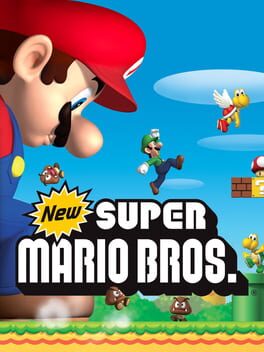
New Super Mario Bros. brings the beloved side‑scrolling Mario experience to a modern handheld, combining tight controls with vibrant 2D graphics. Players dash, jump, and collect coins across dozens of inventive worlds filled with secrets and challenges. The game supports both solo play and cooperative multiplayer, letting friends team up to tackle levels together while discovering hidden paths and power‑up combos. Its timeless design appeals to newcomers and longtime fans alike.
- Extremely tight and responsive controls
- High replayability through fast levels and leaderboards
- Robust level editor for community content
- Sharp, memorable art style and soundtrack
- Tight, responsive controls that feel classic yet fresh.
- Rich variety of power‑ups and level designs.
- Engaging multiplayer modes for up to four players.
- High replay value with secret exits and collectibles.
- Very high difficulty can be frustrating for newcomers
- Limited content beyond core levels without DLC
- No multiplayer or co‑op modes
- Limited online features; focus is on local play.
- Graphics, while charming, may feel dated compared to modern 3D titles.
- No built‑in level editor for user‑generated content.
More alternatives & similar tools
Alternatives to Super Meat Boy
View all →
Alternatives to New Super Mario Bros.
View all →

The Verdict
AI-generated from listing dataNew Super Mario Bros. is the safer default for most players thanks to its broader content, multiplayer fun, and lower difficulty, while Super Meat Boy trades price for intense, speed‑run focused challenge.
Key differences
- •Content volume: Mario offers 80+ levels across 8 worlds; Meat Boy’s core levels are short and fewer.
- •Multiplayer: Mario supports up to 4‑player local co‑op/competitive; Meat Boy is single‑player only.
- •Difficulty: Meat Boy is brutally hard from the start; Mario is accessible to beginners with adjustable challenge.
- •User‑generated content: Meat Boy includes a level editor; Mario has none.
- •Price: Meat Boy costs $9.99 versus Mario’s $59.99.
Gameplay & fun factor
Meat Boy’s tight controls and instant respawns create a fast, addictive loop for skill‑focused players.
Platform availability
Both support PC, consoles, and Switch via shared saves.
Price & value
Meat Boy costs $9.99, offering strong value compared with Mario’s $59.99 price tag.
Multiplayer / co‑op
Mario includes local co‑op for up to four players; Meat Boy is single‑player only.
Content & replayability
Mario provides 80+ levels, secret exits, and power‑ups; Meat Boy relies on short levels and leaderboards.
Difficulty & accessibility
Mario’s difficulty is moderate and family‑friendly; Meat Boy is extremely hard for newcomers.
Graphics & performance
Both feature sharp, stylized art; neither has specified performance issues.
Choose Super Meat Boy if…
Players who crave intense, skill‑based platforming and want a cheap, single‑player experience.
Choose New Super Mario Bros. if…
Families or groups seeking varied levels, power‑ups, and local multiplayer at a higher price.
Common questions
Is Super Meat Boy worth the $9.99 price?
Yes; it offers tight controls, a level editor, and high replayability for a low one‑time cost.
Can I play New Super Mario Bros. with friends?
Yes; it supports local multiplayer for up to four players in cooperative or competitive modes.
Which game has more content to explore?
New Super Mario Bros. provides over 80 levels, secret exits, and diverse power‑ups, while Meat Boy’s core content is limited to short, repeatable stages.