



Dragon Quest III: The Seeds of Salvation vs Dragon Warrior VII
Side-by-side comparison of features, pricing, ratings, and alternatives.
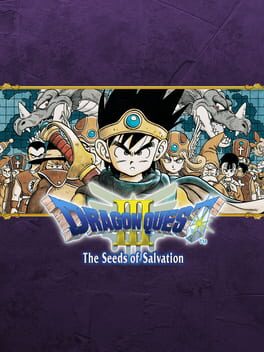
Dragon Quest III: The Seeds of Salvation is a legendary console role-playing game that expands significantly upon its predecessors with an open-world setting and robust class system. Players create a customizable party of adventurers at the local tavern, journey across a world mirroring reality, and engage in classic turn-based combat. The adventure spans multiple continents and introduces groundbreaking features such as a day/night cycle, a monster arena for betting, and the ability to change character classes mid-journey at the temple of Dhama. Ultimately, heroes must uncover the dark world of Alefgard to confront the true mastermind, Zoma, and earn the title of Erdrick.
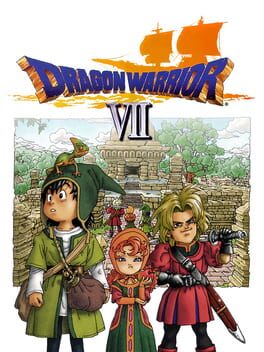
Embark on an epic fantasy role-playing adventure as the Hero and his companions discover that their isolated home of Estard is not the only land in existence. By exploring mysterious ancient ruins, you are transported to the pasts of various forgotten islands where you must battle evil and alter history to restore the world. Developed by Heartbeat and published by Enix, this landmark title marks the first game in the series not bound to a larger trilogy and the final North American release to carry the iconic Dragon Warrior name. Experience a grand journey of discovery, strategic turn-based combat, and time-traveling exploration.
- Engaging class system with mid-game changes
- Expansive open world with day/night cycle
- Memorable turn-based combat mechanics
- Rich fantasy storyline leading to Alefgard
- Vast and immersive epic storyline involving time travel
- Engaging exploration of restored islands and historical eras
- Classic, satisfying turn-based combat mechanics
- Memorable final North American release under the Dragon Warrior name
- Dated critic score metrics
- Encounter rates can feel repetitive
- Limited modern quality-of-life updates in older ports
- Exceedingly slow opening pacing before the main mechanics unfold
- Graphics have aged significantly compared to modern RPG releases
- High time investment required to see the story through to completion
More alternatives & similar tools
Alternatives to Dragon Quest III: The Seeds of Salvation
View all →Uncover the secrets of isolated Estard and restore the world's lost past through ancient ruins.
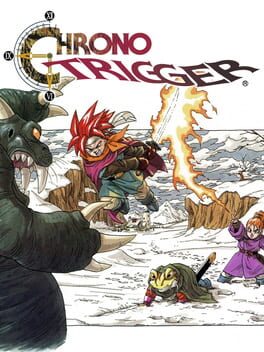
Travel through time to save the world from an ancient destructive force in this classic JRPG.
Alternatives to Dragon Warrior VII
View all →Embark on an epic open-world fantasy journey to defeat the archfiend Baramos and save the world.
The Verdict
AI-generated from listing dataDragon Warrior VII offers a deep, story‑heavy JRPG with time‑travel and massive narrative, while Dragon Quest III provides broader class flexibility and open‑world exploration but with weaker critical reception.
Key differences
- •Dragon Warrior VII focuses on a single, epic storyline with time‑travel ruins; Dragon Quest III emphasizes class swapping and open‑world day/night mechanics.
- •Combat in VII is classic turn‑based tactical; Quest III also turn‑based but adds arena betting and class‑change at level 20.
- •Graphics: VII’s visuals are dated even for 2000; Quest III (2009) is slightly newer but still retro.
- •Critic scores differ dramatically: VII 78/100 vs Quest III reported 0/100.
- •Content length: VII requires dozens of hours for full story; Quest III offers varied side activities like sailing and monster arena.
Gameplay & fun factor
VII’s deep narrative and time‑travel puzzles provide a richer single‑player experience than Quest III’s more generic open world.
Platform availability
Both are single‑player titles; platform specifics not provided.
Price & value
Both cost a one‑time fee; VII’s higher critic score (78) suggests better value than Quest III’s 0 score.
Multiplayer / co‑op
Both are single‑player only.
Content & replayability
Quest III’s class changes, day/night cycle, sailing, and arena betting give more replay options than VII’s linear story.
Difficulty & accessibility
Quest III allows class changes at level 20, offering flexibility; VII’s slow opening may be harder for new players.
Graphics & performance
Quest III (2009) is newer than VII (2000), so graphics are comparatively less outdated.
Choose Dragon Quest III: The Seeds of Salvation if…
Players who want class flexibility, open‑world exploration, and more side activities.
Choose Dragon Warrior VII if…
Fans who prioritize story depth and classic turn‑based combat over modern polish.
Common questions
Which game has better critical reception?
Dragon Warrior VII scored 78/100; Dragon Quest III is listed with a 0/100 critic score.
Do either games support multiplayer?
Both are single‑player only.
Is there a significant difference in graphics quality?
Quest III (2009) is newer and therefore less dated than VII (2000), though both are retro‑style.