



Dragon Quest VIII: Journey of the Cursed King vs Dragon Quest II: Luminaries of the Legendary Line
Side-by-side comparison of features, pricing, ratings, and alternatives.
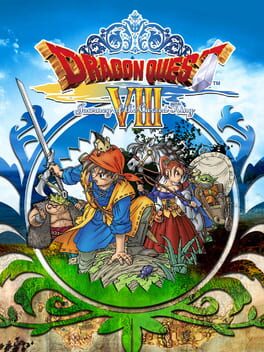
Dragon Quest VIII: Journey of the Cursed King is a classic Japanese-style role-playing game where a sole surviving castle guard, a cursed king turned into a troll, a princess turned into a horse, and a reformed bandit pursue the evil jester Dhoulmagus. Featuring fully realized 3D worlds, continuous landscapes without traditional separated world maps, and classic turn-based combat, it delivers an unforgettable grand adventure. Originally released on the PlayStation 2 and later for the Nintendo 3DS, the game combines beloved character designs by Akira Toriyama with deep tactical party management and interactive environments. Players can smash barrels, rotate cameras freely, and explore vast integrated towns, dungeons, and fields in their quest to break the dark spell cast over the kingdom of Trodain.
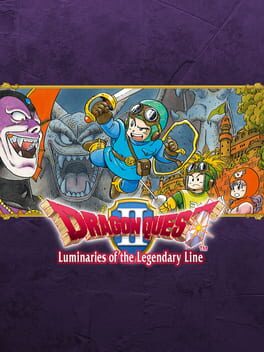
Dragon Quest II: Luminaries of the Legendary Line is a landmark fantasy role-playing game that revolutionized the series by introducing party-based mechanics. Players guide multiple heroes across a vast world to explore dungeons, search treasure chests, trade with villagers, and equip powerful weapons and armor. Originally developed by Matrix Software and published by Square Enix, this installment enhances tactical combat through strategic spellcasting and party management. Experience the legendary journey across modern platforms including PlayStation 4, Android, iOS, and Nintendo Switch.
- Charming cel-shaded art style that holds up well over time
- Vast, seamless world that encourages thorough exploration
- Engaging and memorable cast of main characters
- Classic, accessible turn-based combat system
- First game in the series to introduce party-based mechanics
- Available across multiple modern platforms including mobile and consoles
- Engaging exploration with treasure hunting and villager interactions
- Deep tactical options through diverse weapon equipping and spellcasting
- Random enemy encounters can feel repetitive to some modern players
- Platform availability is limited compared to modern multiplatform releases
- Grinding for levels and gold is sometimes necessary to progress
- Dated game mechanics compared to modern role-playing releases
- Challenging difficulty curve typical of classic 1980s design
- Minimal visual enhancements over earlier legacy versions
More alternatives & similar tools
Alternatives to Dragon Quest VIII: Journey of the Cursed King
View all →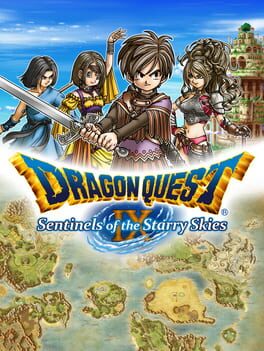
Embark on an epic fantasy adventure as a celestial guardian retrieving sacred tree fruits.
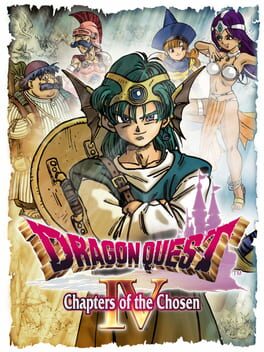
Embark on an epic chapter-driven fantasy journey to save a cursed world.
Embark on a classic fantasy RPG adventure with multiple party members.

Embark on an epic fantasy adventure across two parallel worlds in this classic RPG.
Alternatives to Dragon Quest II: Luminaries of the Legendary Line
View all →
Classic puzzle‑filled RPG adventure on a quest to stop the Sinistrals.
Embark on an epic fantasy adventure across two parallel worlds in this classic RPG.
The Verdict
AI-generated from listing dataProduct B offers a richer, modern experience with superior graphics and critical acclaim, while Product A is a budget‑friendly retro title with classic party mechanics.
Key differences
- •Price: A costs $4.99 versus B’s $49.99.
- •Graphics: B uses cel‑shaded art and full camera control; A has minimal visual updates.
- •Critical reception: B scored 87/100, A has no critic score.
- •World design: B features a seamless open world; A uses a segmented overworld map.
- •Content depth: B includes a longer storyline and more varied environments; A’s content is limited to classic 1980s design.
Pricing & value
A costs $4.99, an order of magnitude cheaper than B’s $49.99 price tag.
Gameplay & fun factor
B provides a seamless open world, cel‑shaded visuals, and a memorable cast, enhancing overall enjoyment.
Platform availability
A is released on multiple modern platforms including mobile and consoles; B’s platform list is limited.
Multiplayer / co‑op
Both are single‑player only.
Content & replayability
B’s larger world, optional first‑person view, and richer story give more replay value than A’s classic, smaller scope.
Difficulty & accessibility
A’s classic 1980s difficulty curve is steeper, making B more accessible to modern players.
Graphics & performance
B’s cel‑shaded art and full camera rotation outperform A’s minimal visual enhancements.
Choose Dragon Quest VIII: Journey of the Cursed King if…
Players seeking a polished, visually appealing JRPG with modern conveniences and strong critical reception.
Choose Dragon Quest II: Luminaries of the Legendary Line if…
Budget‑conscious players who love retro JRPGs and want classic party mechanics.
Common questions
Is the price difference justified?
B costs $49.99 and offers modern graphics, a seamless world, and an 87/100 critic score; A is $4.99 but is a dated classic.
Which game has better graphics?
B features cel‑shaded art, full camera rotation, and optional first‑person view; A has minimal visual enhancements.
Do either of these support multiplayer?
Both titles are single‑player only.