



Fallout Tactics: Brotherhood of Steel vs Fallout: A Post Nuclear Role Playing Game
Side-by-side comparison of features, pricing, ratings, and alternatives.
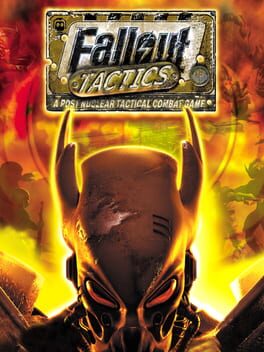
Fallout Tactics: Brotherhood of Steel blends deep squad‑based strategy with the rich lore of the Fallout series. Set in the wasteland after the Great War, players command a team of Brotherhood soldiers in turn‑based battles across an open world. The game offers both single‑player campaigns and multiplayer skirmishes, letting you plan attacks, use stealth, and exploit sci‑fi tech. Its tactical depth and role‑playing elements make each mission a strategic puzzle.
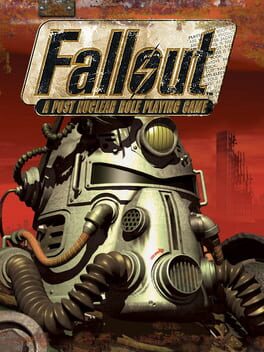
Set in an alternate 1990s America after nuclear war, Fallout lets you wander a vast open world, make moral choices, and survive against mutated creatures. With deep character customization, turn‑based combat, and a richly written story, it defined the post‑apocalyptic RPG genre.
- Deep tactical combat with cover and positioning.
- Rich Fallout lore and setting.
- Robust squad customization.
- Both single‑player and multiplayer options.
- Rich, branching storyline
- Deep character customization
- Atmospheric retro graphics
- High replay value
- Outdated graphics by modern standards.
- Steep learning curve for new players.
- Limited AI variety in higher difficulties.
- Dated user interface
- Occasional combat balance issues
- Limited save‑system flexibility
More alternatives & similar tools
Alternatives to Fallout Tactics: Brotherhood of Steel
View all →
Explore a devastated wasteland in a classic turn‑based RPG
Alternatives to Fallout: A Post Nuclear Role Playing Game
View all →Turn‑based tactical combat meets the post‑apocalyptic Fallout universe.
The Verdict
AI-generated from listing dataFallout: A Post Nuclear Role Playing Game offers deeper solo narrative and character customization, while Fallout Tactics adds squad‑based tactical combat and multiplayer.
Key differences
- •Solo vs squad focus: A is single‑player character‑centric; B lets you control up to six characters.
- •Combat depth: A uses Action Points for individual moves; B adds cover, line‑of‑sight, and terrain mechanics.
- •Multiplayer: A has none; B includes competitive multiplayer for up to four players.
- •Release era and graphics: A (1997) has retro graphics; B (2001) is slightly newer but still dated.
- •Replay hooks: A’s multiple endings via moral choices; B’s branching mission paths and squad customization.
Gameplay & fun factor
Both deliver turn‑based combat; A emphasizes personal story, B emphasizes tactical squad play.
Platform availability
Both are PC titles released by Interplay/Bethesda; no platform differences specified.
Price & value
Both priced at $49.99 one‑time purchase.
Multiplayer / co‑op
B supports single‑player and multiplayer (up to four players); A is single‑player only.
Content & replayability
A offers multiple endings based on moral decisions; B’s replayability relies on mission paths and squad builds.
Difficulty & accessibility
A’s UI is dated but combat balance is generally manageable; B has a steep learning curve and limited AI variety.
Graphics & performance
B is newer (2001) with slightly improved graphics over A’s 1997 retro style, though both are dated.
Choose Fallout Tactics: Brotherhood of Steel if…
Players who enjoy tactical squad combat, cover mechanics, and want multiplayer options.
Choose Fallout: A Post Nuclear Role Playing Game if…
Players who want a deep solo story, character customization, and multiple endings.
Common questions
Do either of these games support multiplayer?
Only Fallout Tactics (Product B) includes multiplayer for up to four players; Fallout A is single‑player only.
Which game offers more story variety?
Fallout A provides multiple endings based on moral choices, giving higher story branching than Fallout Tactics.
Are the prices different?
Both games have the same MSRP of $49.99 as a one‑time purchase.