



Pokémon Blue Version vs Pokémon Emerald Version
Side-by-side comparison of features, pricing, ratings, and alternatives.
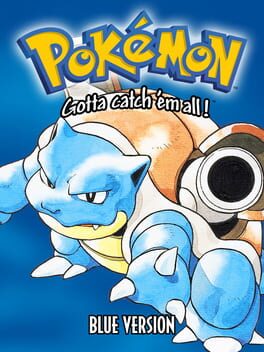
Pokémon Blue Version is a classic role-playing adventure set in the sprawling Kanto region, where players explore diverse environments from bustling towns to mysterious caves. As a young aspiring trainer, you capture and train various creature species, utilizing turn-based combat strategies to defeat gym leaders and the nefarious Team Rocket. Originally released by Game Freak, the game emphasizes exploration, strategic team building, and social interaction through trading and battling with friends via link cables. Its timeless fantasy world and engaging creature-collection mechanics laid the foundation for one of the most beloved media franchises in gaming history.
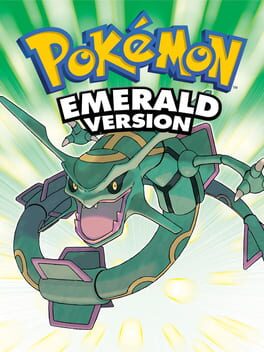
Pokémon Emerald Version is an iconic role-playing adventure that combines elements from both Ruby and Sapphire versions while introducing exciting new features. Players explore the tropical Hoenn region, battle gym leaders, and thwart the evil schemes of Teams Aqua and Magma. This definitive Generation III title adds the thrilling Battle Frontier, animated battle sprites, and expanded storyline elements involving the legendary Pokémon Rayquaza. Experience classic turn-based combat, trade with friends, and prove your mastery as a Pokémon Trainer.
- Engaging and addictive creature collection mechanics
- Memorable soundtrack and iconic retro art style
- Deep strategic combat system with elemental types
- Groundbreaking multiplayer trading and battling features
- Includes content from both Ruby and Sapphire with expanded features
- Introduces the highly engaging and challenging Battle Frontier
- Adds animated battle sprites that bring Pokémon to life
- Features iconic legendary encounters and expanded storyline lore
- Limited inventory management and bag space
- Some version-exclusive Pokémon require trading to obtain
- Dated graphical interface by modern standards
- Requires a Game Boy Advance link cable for trading and multiplayer features
- Graphics and audio are limited by 2004 handheld hardware capabilities
- Some progression paths can require significant grinding to level up your team
More alternatives & similar tools
Alternatives to Pokémon Blue Version
View all →
Embark on a grand adventure across the Johto region in this classic RPG.
Relive the classic adventure with Pikachu by your side
Embark on an enhanced adventure in the Johto region with the legendary Suicune.
Embark on an enhanced adventure through the vibrant Hoenn region to catch legendary Pokémon.
Alternatives to Pokémon Emerald Version
View all →Embark on an epic quest to catch, train, and battle your way to become the ultimate Pokémon Champion.
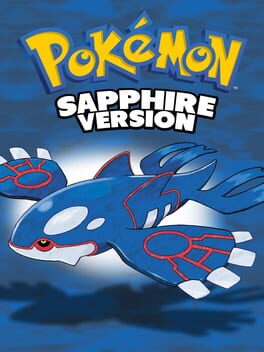
Embark on an epic adventure through the Hoenn region to become the Pokémon Champion.
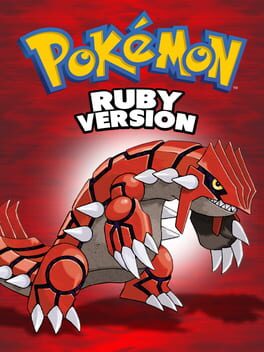
Embark on a classic adventure in the Hoenn region to become the Pokémon Champion.
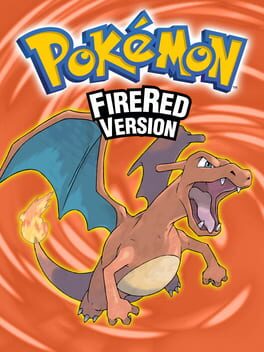
Return to the Kanto region in this definitive reimagining of the classic RPG.
The Verdict
AI-generated from listing dataPokémon Emerald offers more content, Battle Frontier challenges, and animated sprites but costs more and needs a GBA link cable; Pokémon Blue is cheaper, classic, and simpler but lacks the extra features.
Key differences
- •Emerald includes content from Ruby/Sapphire plus Battle Frontier; Blue is the original Kanto experience only.
- •Emerald adds animated battle sprites and a larger legendary roster; Blue has static sprites and fewer legendaries.
- •Emerald’s critic score is 60/100 versus Blue’s 95/100, indicating stronger critical reception for Blue.
- •Emerald costs $39.99, Blue costs $29.99, a $10 price difference.
- •Emerald requires a Game Boy Advance link cable for multiplayer; Blue also needs a link cable but is older hardware.
Gameplay & fun factor
Emerald adds Battle Frontier and more legendary encounters, expanding tactical depth beyond Blue's core Kanto loop.
Platform availability
Both are handheld titles requiring a link cable; neither offers modern platform support.
Price & value
Blue is $29.99 versus Emerald at $39.99, offering lower upfront cost.
Multiplayer / co-op
Emerald’s Battle Frontier and expanded link‑cable features give more multiplayer variety than Blue.
Content & replayability
Emerald combines Ruby/Sapphire content, Battle Frontier, and three weather‑trio legendaries, far exceeding Blue’s single region.
Difficulty & accessibility
Blue’s simpler progression and lower grind make it more accessible for casual players.
Graphics & performance
Emerald features animated battle sprites, a visual upgrade over Blue’s static graphics.
Choose Pokémon Blue Version if…
Buyers seeking a cheaper, classic experience with strong critical praise and lower complexity.
Choose Pokémon Emerald Version if…
Players wanting the most content, challenges, and animated battles, willing to pay extra.
Common questions
Is the extra $10 for Emerald worth the additional content?
Emerald adds Battle Frontier, animated sprites, and more legendaries, which many consider valuable beyond Blue’s base game.
Do I need any special hardware for multiplayer?
Both require a link cable; Emerald specifically needs a Game Boy Advance link cable, while Blue uses the original Game Boy link cable.
Which game has better critical reception?
Blue has a higher critic score (95/100) compared to Emerald (60/100).