



Portal vs Half-Life
Side-by-side comparison of features, pricing, ratings, and alternatives.

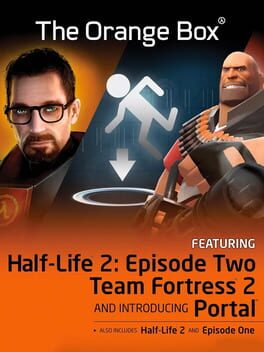
Portal is a first-person puzzle game developed by Valve. Players take on the role of Chell, a test subject who awakens in the Aperture Science computer-aided enrichment center. Guided by the sadistic artificial intelligence system GLaDOS, Chell must navigate through increasingly challenging test chambers using the 'portal gun,' a device that can create two portals that allow for instant transportation between them. As Chell progresses through the game, she uncovers the dark secrets behind Aperture Science and must use her wits to escape the crumbling facility.
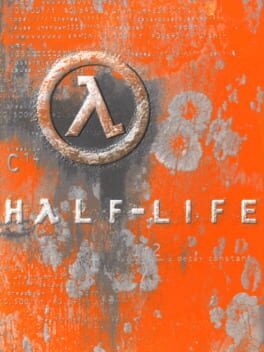
Half-Life is a first-person shooter that challenges players to navigate the Black Mesa research facility after an experiment goes horribly wrong. With its engaging storyline and immersive gameplay, Half-Life has become a classic in the gaming world.
- Challenging and addictive gameplay
- Immersive storyline with a sadistic AI antagonist
- Mind-bending puzzles that require critical thinking
- Unique gameplay mechanic with the portal gun
- Immersive storyline and engaging gameplay
- Challenging and intense combat
- Richly detailed and realistic environments
- Highly replayable with multiple game modes
- Short gameplay experience
- Limited replay value
- Some players may find the puzzles too challenging or frustrating
- Some players may find the game's graphics and sound to be dated
- Limited character customization options
- Some levels can be frustratingly difficult
More alternatives & similar tools
Alternatives to Portal
View all →

Alternatives to Half-Life
View all →

The Verdict
AI-generated from listing dataPortal offers a concise, puzzle‑focused single‑player experience with a unique portal mechanic, while Half‑Life delivers longer, combat‑heavy gameplay with both single‑player and multiplayer modes.
Key differences
- •Portal is pure puzzle‑solving with a single‑player focus; Half‑Life blends shooting, combat and puzzles with multiplayer.
- •Portal’s playtime is short with limited replay value; Half‑Life provides longer content and higher replayability via multiple modes.
- •Portal costs $19.99 and is available on many consoles and PC; Half‑Life costs $29.99 and is primarily a PC title (no console platforms listed).
- •Portal’s core mechanic is the portal gun for spatial puzzles; Half‑Life emphasizes a traditional FPS arsenal and physics‑based interactions.
Gameplay & fun factor
Half‑Life combines combat, physics puzzles, and multiplayer, offering broader gameplay variety than Portal’s puzzle‑only focus.
Platform availability
Portal runs on PlayStation 3, Xbox 360, Nintendo Switch, Linux, Android, PC, and Mac; Half‑Life lists only PC platforms.
Price & value
Portal is $10 cheaper ($19.99) and provides a complete experience despite shorter length.
Multiplayer / co‑op
Half‑Life includes both single‑player and multiplayer modes; Portal is single‑player only.
Content & replayability
Half‑Life’s longer campaign and multiple game modes increase replay value versus Portal’s limited replayability.
Difficulty & accessibility
Portal’s puzzles can be challenging but are generally less combat‑intensive than Half‑Life’s tougher enemy encounters.
Graphics & performance
Both have similar critic scores (80/100) and no specific graphics data provided; neither is noted as superior.
Choose Portal if…
Puzzle lovers seeking a short, single‑player experience on any major console or PC.
Choose Half-Life if…
Players wanting longer, combat‑driven FPS action with multiplayer options, primarily on PC.
Common questions
Which game is cheaper?
Portal costs $19.99; Half‑Life costs $29.99.
Do either of these support multiplayer?
Half‑Life includes multiplayer; Portal is single‑player only.
Are both games available on my console?
Portal is available on PlayStation 3, Xbox 360, Nintendo Switch, PC, Mac, Linux, Android; Half‑Life lists only PC platforms.