



SimCity vs Cities in Motion
Side-by-side comparison of features, pricing, ratings, and alternatives.

SimCity lets players design, develop, and govern a virtual city from the ground up, balancing residential, commercial, and industrial zones while handling utilities and transportation. The classic 1989 title offers a timeless sandbox experience that challenges strategic thinking and urban planning skills.
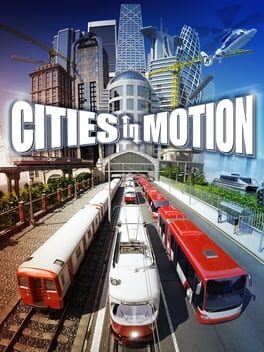
Cities in Motion lets you design, operate, and expand transportation systems across bustling urban environments. As the manager, you coordinate buses, trams, metros, and ferries to keep citizens moving efficiently.
- Deep city‑building mechanics
- Easy-to‑learn interface
- Replayable with multiple scenarios
- Classic retro charm
- Deep transport management mechanics
- Wide variety of vehicles and routes
- Robust scenario editor for custom content
- Engaging economic simulation
- Limited graphics by modern standards
- No multiplayer mode
- Steep learning curve for advanced systems
- Steep learning curve for beginners
- Limited multiplayer options (single‑player only)
- Graphics are dated compared to modern titles
More alternatives & similar tools
Alternatives to SimCity
View all →
Alternatives to Cities in Motion
View all →


The Verdict
AI-generated from listing dataCities in Motion offers deeper transport‑specific management and a robust scenario editor, while SimCity provides broader city‑building tools with a gentler learning curve; choose based on whether you prioritize transport depth or overall city‑building simplicity.
Key differences
- •Cities in Motion focuses exclusively on designing and optimizing public‑transport networks; SimCity covers full city zoning, utilities and disasters.
- •Cities in Motion includes a built‑in scenario editor for custom transport challenges; SimCity only allows saving/loading multiple city scenarios.
- •Graphics are dated for both, but Cities in Motion (2011) is newer than SimCity (1989), giving it a slight visual edge.
- •Both are single‑player only, but Cities in Motion has a steeper learning curve due to detailed economic and environmental metrics.
Gameplay & fun factor
Cities in Motion provides deeper transport mechanics and real‑time demand monitoring, appealing to transport enthusiasts.
Platform availability
Both are single‑player PC titles; no platform differences are specified.
Price & value
Both are one‑time purchases; only Cities in Motion lists MSRP ($29.99), SimCity price not specified.
Multiplayer / co‑op
Both are single‑player only; no multiplayer options for either.
Content & replayability
Cities in Motion’s scenario editor and vehicle customization give higher replay potential than SimCity’s basic save/load.
Difficulty & accessibility
SimCity’s interface is described as easy‑to‑learn, whereas Cities in Motion has a steep learning curve.
Graphics & performance
Cities in Motion (2011) is newer, so its graphics are less dated than SimCity’s 1989 visuals.
Choose SimCity if…
Players seeking a classic, broader city‑building experience with a gentler learning curve.
Choose Cities in Motion if…
Transport‑management fans who want detailed route design and custom scenarios.
Common questions
Which game is cheaper?
Cities in Motion lists an MSRP of $29.99; SimCity’s price is not specified.
Can I play with friends?
No; both titles are single‑player only.
Which game offers more content creation tools?
Cities in Motion includes a built‑in scenario editor for custom transport challenges; SimCity only allows saving/loading cities.