



AMD Ryzen 7 9800X3D vs Intel Core Ultra 9 285H
Side-by-side comparison of features, pricing, ratings, and alternatives.
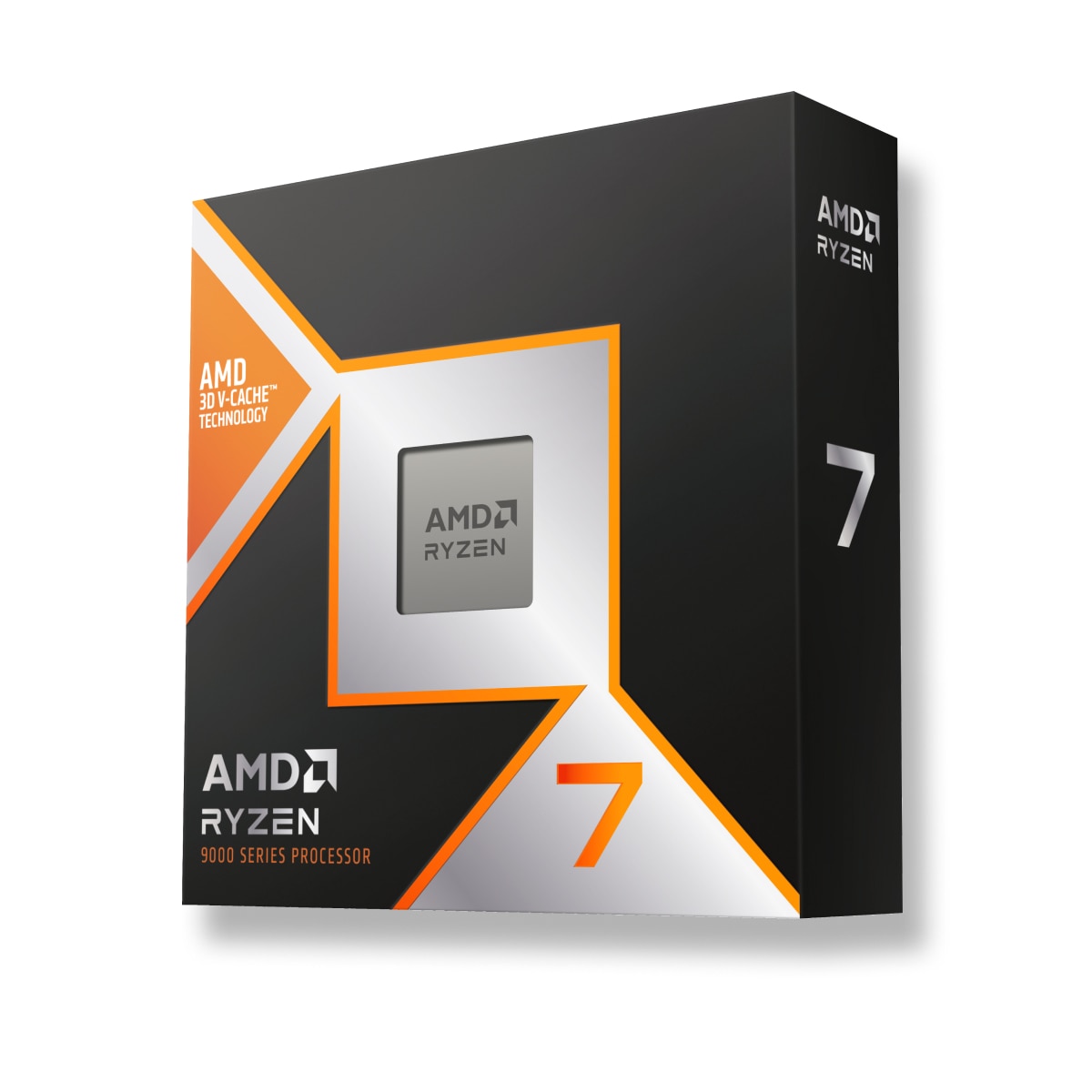
Experience the power of AMD's Ryzen 7 9800X3D, a cutting-edge processor designed to deliver exceptional performance and efficiency. With its advanced 4nm and 6nm FinFET process nodes, this CPU is perfect for gamers, content creators, and professionals who demand the best.
The Intel Core Ultra 9 285H is a revolutionary CPU built on the advanced TSMC N3B process node, combining 16 cores and 16 threads with a 5.4 GHz boost clock. Engineered for elite mobile systems, it delivers exceptional efficiency and computing power for intensive workloads. Equipped with powerful Intel Arc 140T integrated graphics and advanced architecture, this processor excels at high-end gaming, complex content creation, and professional productivity applications without requiring a discrete GPU for basic visual tasks.
- Exceptional performance and efficiency
- Advanced 4nm and 6nm FinFET process nodes
- High-performance integrated graphics
- Supports latest PCIe 5.0 and DDR5 technologies
- Exceptional multi-core and single-core performance for mobile devices
- Powerful integrated Intel Arc graphics capability
- Advanced 3nm TSMC N3B process node for improved efficiency
- Dedicated NPU support for modern AI tasks
- High power consumption with 120W TDP
- May require expensive AM5 motherboard
- Limited overclocking capabilities
- High maximum turbo power draw of 115W requires robust cooling
- Limited to laptop and mobile form factors via FCBGA2049 socket
- Premium pricing tier positioning for high-end systems
More alternatives & similar tools
Alternatives to AMD Ryzen 7 9800X3D
View all →

A high-performance mobile processor designed for gamers and demanding creators.
Alternatives to Intel Core Ultra 9 285H
View all →A powerful processor combining Zen 5 and Zen 5c architectures for next-gen computing.

The Verdict
AI-generated from listing dataThe AMD Ryzen 7 9800X3D is built for high-performance desktop systems with massive L3 cache, whereas the Intel Core Ultra 9 285H is designed specifically for mobile and laptop form factors.
Key differences
- •Form factor and socket: AMD uses the desktop AM5 socket, while Intel is restricted to mobile/laptop form factors via the FCBGA2049 socket.
- •Cache capacity: AMD offers 96 MB of cache compared to Intel's 24MB.
- •Core configuration: AMD features 8 cores and 16 threads, while Intel uses a 16-core hybrid architecture (6P, 8E, 2LP) with 16 threads.
- •Base and boost clocks: AMD runs at a 4.7 GHz base and 5.2 GHz boost, whereas Intel runs at a 2.9 GHz P-core base and 5.4 GHz max turbo boost.
- •Integrated graphics: AMD includes 2-core Radeon Graphics, while Intel features Intel Arc 140T with 8 Xe-cores.
Performance
Both offer exceptional performance for gamers and creators, with AMD utilizing 96 MB cache and Intel reaching a 5.4 GHz boost.
Build quality
Not specified.
Connectivity
AMD natively supports PCIe 5.0 for faster storage and graphics performance.
Power & efficiency
Intel operates at a lower 45W base TDP (scaling to 115W max), whereas AMD operates at a flat 120W TDP.
Compatibility
AMD fits the AM5 desktop socket, while Intel is limited to mobile laptops via the FCBGA2049 socket.
Price & value
AMD pricing requires contact, and Intel is positioned in a premium pricing tier for high-end systems.
Warranty & support
Not specified.
Choose AMD Ryzen 7 9800X3D if…
Gamers and desktop enthusiasts seeking high-end desktop performance and PCIe 5.0 support.
Choose Intel Core Ultra 9 285H if…
Users looking for a high-performance mobile processor designed for laptops.
Common questions
Can I use the Intel Core Ultra 9 285H in a custom desktop build?
No, it is limited to laptop and mobile form factors via the FCBGA2049 socket.
Which processor has a larger cache?
The AMD Ryzen 7 9800X3D has 96 MB of cache, while the Intel Core Ultra 9 285H has 24MB.
What are the power requirements for each processor?
The AMD Ryzen 7 9800X3D has a 120W TDP, while the Intel Core Ultra 9 285H has a 45W base TDP and 115W max turbo TDP.