



Spellbreaker vs Wishbringer
Side-by-side comparison of features, pricing, ratings, and alternatives.
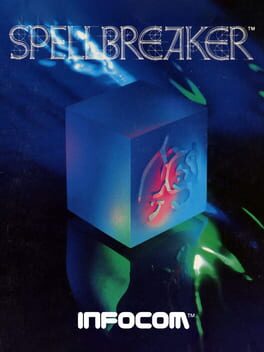

Spellbreaker is an interactive fiction computer game written by Dave Lebling and released by Infocom in 1985. As the leader of the Circle of Enchanters, players must investigate a catastrophic crisis where magic itself is failing across the realm, leading to bizarre transformations and a desperate final conflict between good and evil. Building upon the mechanics of Enchanter and Sorcerer, this title challenges players to use their wits and command magical spells through parser-based text input. Spanning classic computing platforms, it offers a deeply immersive narrative experience set in the Great Underground Empire.
Wishbringer: The Magick Stone of Dreams is an interactive fiction computer game written by Brian Moriarty and published by Infocom in 1985. As a postal clerk in the fishing village of Festeron, you are tasked with delivering an envelope to Ye Olde Magick Shoppe, only to find the town transformed into the sinister Witchville after a kindly shopkeeper asks you to rescue her cat from The Evil One. Armed with the magical Wishbringer stone, you must navigate puzzles using seven unique wishes requiring specific objects to defeat The Evil One within a few hours. Designed as an accessible entry point to interactive fiction for inexperienced players, this text-based adventure delivers an engaging fantasy mystery filled with clever challenges.
- Engaging and richly written fantasy narrative
- Clever, rewarding puzzle design
- Satisfying conclusion to a beloved trilogy
- Deeply immersive text-based gameplay
- Accessible difficulty curve makes it great for beginners
- Engaging and atmospheric fantasy storyline
- Clever use of the magical wish mechanics
- Well-written text prose by Brian Moriarty
- High difficulty level can frustrate modern players
- Lacks graphical interface or visual aids
- Strict text parser requires precise command phrasing
- Limited replay value once all puzzles are solved
- Text parser can occasionally be restrictive compared to modern games
- Short overall length relative to harder Infocom titles
More alternatives & similar tools
Alternatives to Spellbreaker
View all →Alternatives to Wishbringer
View all →
Venture into a hidden region of the Great Underground Empire and outwit a senile wizard.
The Verdict
AI-generated from listing dataWishbringer offers a gentle, beginner-friendly adventure with a short, charming story, while Spellbreaker delivers a challenging, deep finale to a classic trilogy.
Key differences
- •Difficulty: Wishbringer is beginner-friendly; Spellbreaker is high difficulty.
- •Replay value: Wishbringer has limited replay once puzzles solved; Spellbreaker’s complex puzzles encourage multiple attempts.
- •Story scope: Wishbringer is a standalone short adventure; Spellbreaker concludes the Enchanter Trilogy.
- •Puzzle complexity: Wishbringer uses simple puzzles; Spellbreaker requires intricate, logic‑based solutions and a vast vocabulary.
Gameplay & fun factor
Both provide engaging text‑adventure experiences; enjoyment depends on preferred difficulty.
Platform availability
Both are single‑player text games released in 1985; no platform differences specified.
Price & value
Both are one‑time paid; Wishbringer’s shorter length offers quicker value for beginners.
Multiplayer / co‑op
Both are single‑player only.
Content & replayability
Spellbreaker’s intricate puzzles and trilogy conclusion give higher replay incentive than Wishbringer’s limited replay.
Difficulty & accessibility
Wishbringer’s accessible difficulty curve suits newcomers; Spellbreaker’s high difficulty can frustrate.
Graphics & performance
Both rely solely on text; no graphical differences.
Choose Spellbreaker if…
Seasoned text‑adventure fan seeking a tough, story‑rich conclusion.
Choose Wishbringer if…
New to interactive fiction or prefers a short, low‑stress adventure.
Common questions
Which game is better for a beginner?
Wishbringer, because it has an accessible difficulty curve and beginner‑friendly puzzles.
Do either games offer multiplayer?
No; both are single‑player only.
Is there more content to replay in Spellbreaker?
Yes; Spellbreaker’s intricate puzzles and trilogy ending provide higher replay value than Wishbringer.