



Dragon Quest III: The Seeds of Salvation vs Dragon Quest II: Luminaries of the Legendary Line
Side-by-side comparison of features, pricing, ratings, and alternatives.
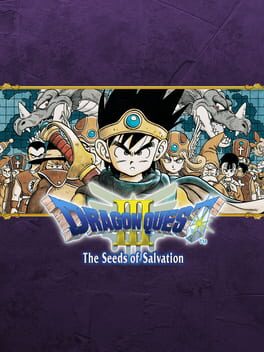
Dragon Quest III: The Seeds of Salvation is a legendary console role-playing game that expands significantly upon its predecessors with an open-world setting and robust class system. Players create a customizable party of adventurers at the local tavern, journey across a world mirroring reality, and engage in classic turn-based combat. The adventure spans multiple continents and introduces groundbreaking features such as a day/night cycle, a monster arena for betting, and the ability to change character classes mid-journey at the temple of Dhama. Ultimately, heroes must uncover the dark world of Alefgard to confront the true mastermind, Zoma, and earn the title of Erdrick.
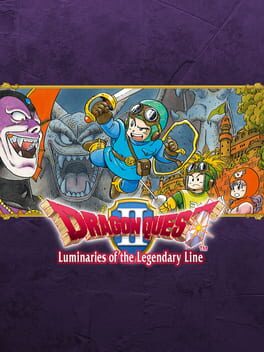
Dragon Quest II: Luminaries of the Legendary Line is a landmark fantasy role-playing game that revolutionized the series by introducing party-based mechanics. Players guide multiple heroes across a vast world to explore dungeons, search treasure chests, trade with villagers, and equip powerful weapons and armor. Originally developed by Matrix Software and published by Square Enix, this installment enhances tactical combat through strategic spellcasting and party management. Experience the legendary journey across modern platforms including PlayStation 4, Android, iOS, and Nintendo Switch.
- Engaging class system with mid-game changes
- Expansive open world with day/night cycle
- Memorable turn-based combat mechanics
- Rich fantasy storyline leading to Alefgard
- First game in the series to introduce party-based mechanics
- Available across multiple modern platforms including mobile and consoles
- Engaging exploration with treasure hunting and villager interactions
- Deep tactical options through diverse weapon equipping and spellcasting
- Dated critic score metrics
- Encounter rates can feel repetitive
- Limited modern quality-of-life updates in older ports
- Dated game mechanics compared to modern role-playing releases
- Challenging difficulty curve typical of classic 1980s design
- Minimal visual enhancements over earlier legacy versions
More alternatives & similar tools
Alternatives to Dragon Quest III: The Seeds of Salvation
View all →
Uncover the secrets of isolated Estard and restore the world's lost past through ancient ruins.
Travel through time to save the world from an ancient destructive force in this classic JRPG.
Embark on a classic fantasy RPG adventure with multiple party members.
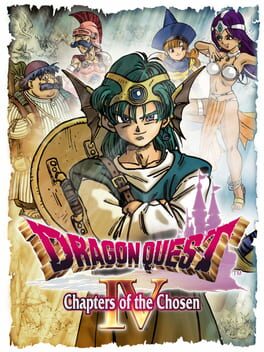
Embark on an epic chapter-driven fantasy journey to save a cursed world.
Alternatives to Dragon Quest II: Luminaries of the Legendary Line
View all →
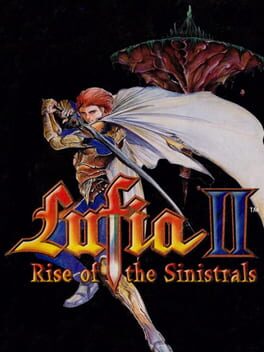
Classic puzzle‑filled RPG adventure on a quest to stop the Sinistrals.

Embark on an epic fantasy adventure across two parallel worlds in this classic RPG.
The Verdict
AI-generated from listing dataBoth titles are classic, low‑cost Dragon Quest JRPGs; choose A for party‑based combat and treasure hunting, or B for class swapping and a larger open world.
Key differences
- •A features simultaneous multi‑character control from the start; B lets you recruit and swap up to three companions later.
- •B includes a day/night cycle and open‑world sailing, which A lacks.
- •A emphasizes tactical spellcasting and equipment variety; B focuses on class changes at level 20 and a temple system.
- •A is available on multiple modern platforms (mobile and consoles); B’s platform list isn’t specified.
- •Both have the same price point, but B’s MSRP isn’t listed in the facts.
Gameplay & fun factor
B offers class changes, day/night cycle, sailing, and a larger open world, adding more variety than A's static party system.
Platform availability
A is explicitly noted as available across multiple modern platforms including mobile and consoles; B's platforms are not specified.
Price & value
Both are paid one‑time titles; A’s MSRP is $4.99, B’s price isn’t given, so value cannot be differentiated.
Multiplayer / co‑op
Both are single‑player only, so neither has an advantage.
Content & replayability
B’s class swapping, day/night quests, and ship sailing provide more replay hooks than A’s static party and treasure hunting.
Difficulty & accessibility
A’s difficulty is described as challenging typical of 1980s design; B’s difficulty is noted as repetitive but not explicitly harder.
Graphics & performance
A mentions minimal visual enhancements over legacy versions, implying modest updates; B provides no graphics information.
Choose Dragon Quest III: The Seeds of Salvation if…
Players seeking deeper customization, open‑world exploration, and class‑changing mechanics.
Choose Dragon Quest II: Luminaries of the Legendary Line if…
Fans who want classic turn‑based combat with a fixed party and broad platform support.
Common questions
Is either game cheaper than the other?
A lists an MSRP of $4.99; B’s price is not specified, so cost cannot be directly compared.
Do either of the games support multiplayer?
Both are single‑player only.
Which title offers more exploration content?
B includes an open world with day/night cycles, sailing, and hidden locations, offering more exploration than A.