



Dragon Quest III: The Seeds of Salvation vs Dragon Quest IV: Chapters of the Chosen
Side-by-side comparison of features, pricing, ratings, and alternatives.
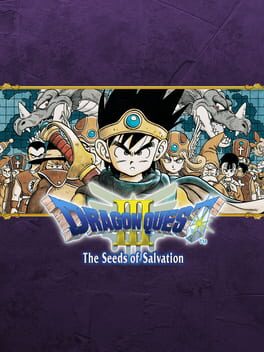
Dragon Quest III: The Seeds of Salvation is a legendary console role-playing game that expands significantly upon its predecessors with an open-world setting and robust class system. Players create a customizable party of adventurers at the local tavern, journey across a world mirroring reality, and engage in classic turn-based combat. The adventure spans multiple continents and introduces groundbreaking features such as a day/night cycle, a monster arena for betting, and the ability to change character classes mid-journey at the temple of Dhama. Ultimately, heroes must uncover the dark world of Alefgard to confront the true mastermind, Zoma, and earn the title of Erdrick.
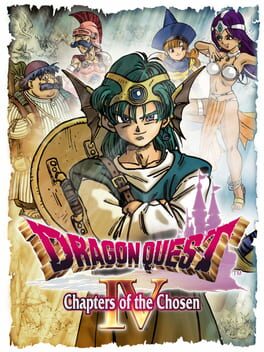
Experience the classic grand entry from the Zenithia Trilogy through the unique perspectives of multiple characters across distinct chapters. Indulge in a colorful fantasy world created by Yuji Horii, featuring charming characters and monsters designed by Akira Toriyama and a memorable soundtrack by Koichi Sugiyama. Journey through a beautifully crafted adventure where each chapter follows different heroes—from a royal soldier and a rebellious princess to an aspiring merchant and twin sisters—ultimately uniting to unravel an ancient mystery and defeat the forces of darkness.
- Engaging class system with mid-game changes
- Expansive open world with day/night cycle
- Memorable turn-based combat mechanics
- Rich fantasy storyline leading to Alefgard
- Engaging and unique chapter-driven storytelling perspective
- Charmingly designed characters and monsters by Akira Toriyama
- Memorable musical score by Koichi Sugiyama
- Rich post-game content including an extra bonus dungeon
- Dated critic score metrics
- Encounter rates can feel repetitive
- Limited modern quality-of-life updates in older ports
- Party Chat feature is absent from the English version
- Single-player experience lacks cooperative multiplayer options
- Random encounter rate can feel dated to modern gamers
More alternatives & similar tools
Alternatives to Dragon Quest III: The Seeds of Salvation
View all →
Uncover the secrets of isolated Estard and restore the world's lost past through ancient ruins.
Travel through time to save the world from an ancient destructive force in this classic JRPG.
Embark on a classic fantasy RPG adventure with multiple party members.
Embark on an epic chapter-driven fantasy journey to save a cursed world.
Alternatives to Dragon Quest IV: Chapters of the Chosen
View all →Embark on an epic open-world fantasy journey to defeat the archfiend Baramos and save the world.
Embark on a classic fantasy RPG adventure with multiple party members.
Embark on an epic cel-shaded fantasy journey to lift a royal curse.
Uncover the secrets of isolated Estard and restore the world's lost past through ancient ruins.
The Verdict
AI-generated from listing dataBoth are classic Dragon Quest JRPGs, but Dragon Quest IV offers higher critical acclaim and richer narrative, while Dragon Quest III provides deeper class customization and an open world.
Key differences
- •Class system: III lets you switch classes at level 20; IV has fixed hero roles.
- •World design: III features an open world with day/night cycles; IV is chapter‑based linear.
- •Critical reception: III has a 0/100 critic score; IV scores 88/100.
- •Post‑game content: IV includes a bonus dungeon and extra recruitable character; III’s post‑game is limited.
- •Art & music: IV showcases Akira Toriyama art and Koichi Sugiyama soundtrack; III’s assets are not highlighted.
Gameplay & fun factor
III offers class swapping, ship sailing, and day/night quests, giving more mechanical variety than IV's fixed chapters.
Platform availability
Both are single‑player releases on the same platforms (implied by similar release era).
Price & value
IV’s higher critic score (88) suggests better value for money compared to III’s 0 score.
Multiplayer / co‑op
Both are single‑player only; no co‑op features in either.
Content & replayability
III’s open world, class changes, and ship travel provide more replay hooks than IV’s linear chapters.
Difficulty & accessibility
IV’s modern critic score and less repetitive encounter rates suggest smoother difficulty curve.
Graphics & performance
No specific graphics data provided for either; assume comparable legacy performance.
Choose Dragon Quest III: The Seeds of Salvation if…
Players who love deep class customization, open‑world exploration, and tactical variety.
Choose Dragon Quest IV: Chapters of the Chosen if…
Players who prioritize story, critical acclaim, and polished post‑game content.
Common questions
Which game has better critical reviews?
Dragon Quest IV has a critic score of 88/100, while Dragon Quest III is listed with 0/100.
Can I change my character class after starting?
Yes, in Dragon Quest III you can change classes at the temple once a character reaches level 20; IV does not allow class changes.
Is there any multiplayer or co‑op option?
Both titles are single‑player only; neither includes multiplayer or co‑op features.